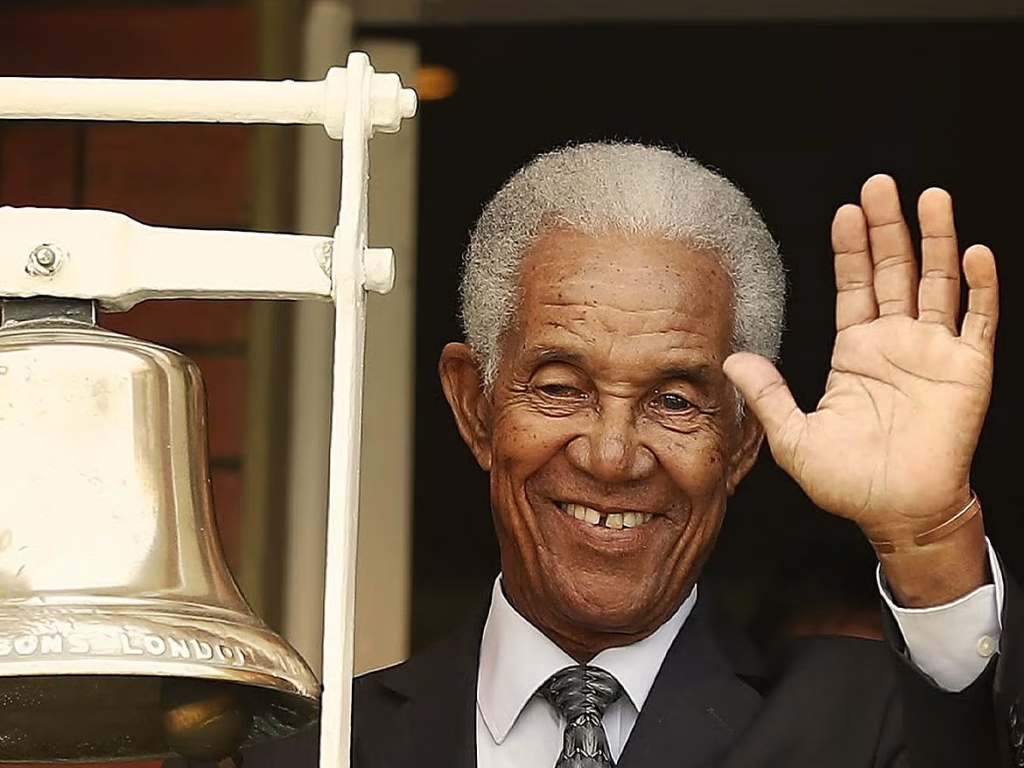
Sobers played for West Indies, his home island of Barbados, Nottinghamshire and South Australia
Legendary former West Indies all-rounder Sir Garfield Sobers, regarded as one of the greatest cricketers of all time, has died aged 89. Sobers played 93 Tests between 1954 and 1974, scored 8,032 runs and took 235 wickets.
An entertaining left-handed batter, Sobers scored 365 not out against Pakistan in 1958 – an effort which stood as the record Test score for 36 years. He was also a brilliantly versatile bowler, who bowled spin and seam. Sobers, who also played county cricket for Nottinghamshire, was knighted for his services to cricket in 1975. He was also named one of Wisden’s five cricketers of the 20th century. During his stint at Nottinghamshire in 1968, Sobers became the first player to hit a six off all six balls in an over in a first-class match.
A period of celebration will be held in memory of Sobers before Nottinghamshire’s T20 Blast semi-final against Hampshire at Edgbaston on Saturday. The club described Sobers as “cricket’s greatest-ever all-rounder and an iconic figure in Nottinghamshire history”. “We are extremely saddened to hear of the passing of Sir Garfield Sobers,” Notts added.
England also paid tribute on social media, calling Sobers “one of the greatest to ever play the game”. “Forever in our hearts, Sir Garfield Sobers,” they added.
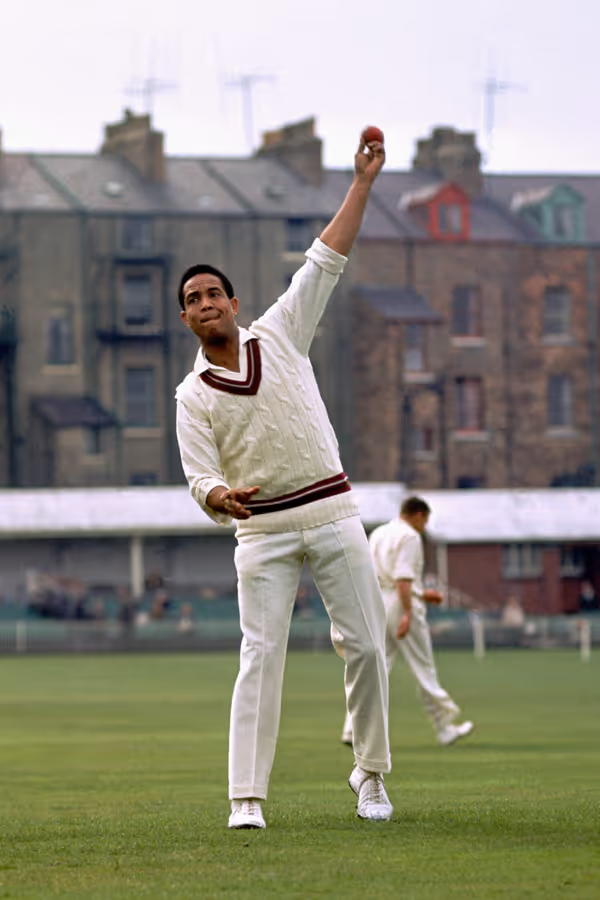
The prime minister of Barbados, Mia Mottley, paid tribute to Sobers in a post on social media and said that Friday has been declared a day of national mourning – flags will be flown at half-mast and no official functions will take place. A state funeral will follow in the coming days.
Sobers was the first batter to hit six sixes in an over when playing for Nottinghamshire at Glamorgan’s St Helen’s ground in Swansea in 1968. But it was just one of many feats in an illustrious career featuring 93 Test matches for West Indies – including 39 as captain – from 1954 to 1974.
The late, revered broadcaster and former Australia captain Richie Benaud once described Sobers as “the greatest all-round cricketer the world has seen”.
Benaud wrote: “Sobers was a brilliant batsman, splendid fielder, particularly close to the wicket, and a bowler of extraordinary skill, whether bowling with the new ball, providing orthodox left-arm spin or over-the-wrist spin.”
From a humble background, Sobers first caught the eye playing club cricket, before turning out for the Barbados police aged 15 and making his first-class debut a year later against India at Kensington Oval, Bridgetown. His Test debut for West Indies aged 17 followed in 1954 against Len Hutton’s England at Sabina Park in Jamaica.
Kishore Shallow, president of Cricket West Indies, wrote: “In the story of cricket, there are great players. There are champions. Then, there are those rare individuals who redefine the very meaning of greatness. Sir Garfield Sobers was the greatest cricketer the world has ever seen.
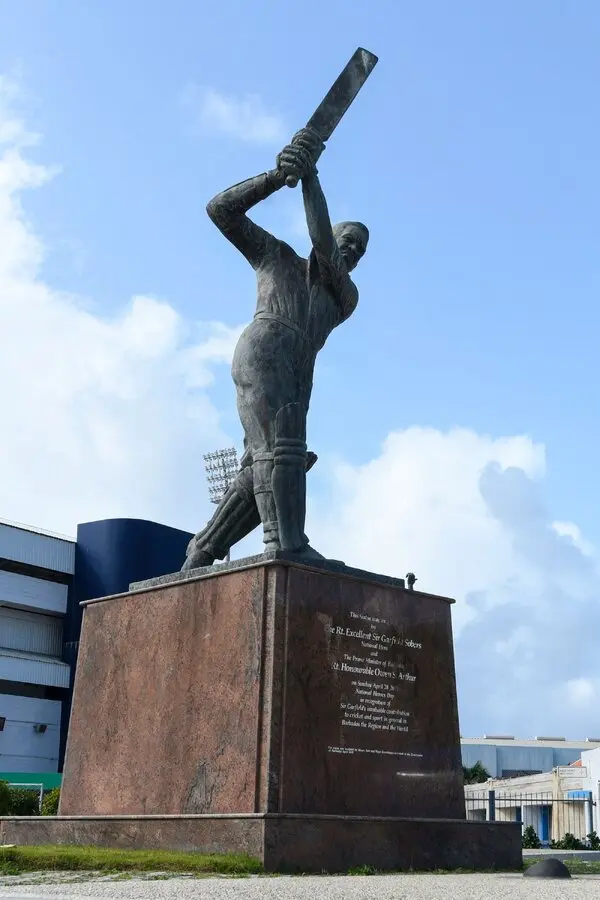
A statue of Sir Garfield Sobers Kensington Oval in Barbados. Photograph: Jason O’Brien/Reuters
“He emerged from the Caribbean at a time when our region was finding its voice and asserting its place on the world stage. Through his excellence, he gave millions across our islands and in the diaspora, a renewed belief in what was possible. He showed that greatness was not confined by the size of our nations, the geography of our islands or the circumstances of our beginnings.
“Sir Garfield Sobers became more than a sporting icon. He became a symbol of Caribbean excellence, resilience and possibility. His achievements brought pride to Barbados, inspiration to the West Indies and admiration from every corner of the cricketing world.”
In his later years Sobers was often seen watching West Indies’ matches at Kensington Oval in Bridgetown, sitting on a wicker chair at the top of the Worrell, Weekes and Walcott Stand next to the pavilion that bears his name. He is also immortalised in a statue at the same end of the ground, playing a straight drive with a flourish to denote his swashbuckling approach with the bat.
David Rudder, the legendary calypsonian from Trinidad who wrote the anthem Rally Round the West Indies, said: “The great man has left the round table with blade, flannels and ball.
“Perhaps he has seen enough of a difference in these young men who now hold the flame. So on this fine day, with collar up, arrogant stride, the man we call THE GOAT, has joined the ancestors. Farewell.”

